
Magnet - 2D Solutions
Introduction
The Magnet is available for:
- Magnetostatic solution (MS2D)
- Transient Magnetic solution (MT2D)
The Magnet allows you:
- to define the magnetic orientation of a permanent magnet
- to compute or not the Magnet losses for the Transient Magnetic solutions only
- to take into account the Demagnetization for the
Transient Magnetic solutions onlyNote: In order to take into account the Demagnetization, the permanent magnet material must be non-linear.
Dialog Box
| 2D Magnetostatic solution (MS2D) | 2D Transient Magnetic solution (MT2D) |
|---|---|
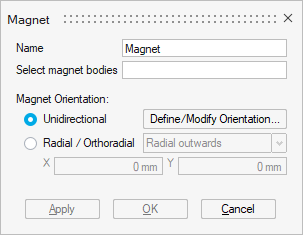 |
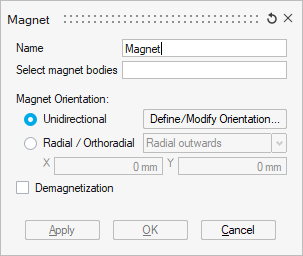 |
- Select magnet bodies: Select one or several bodies to define as a magnet.
-
Magnet Orientation: two choices
-
Unidirectional: along a vector to define by clicking on Define/Modify Orientation
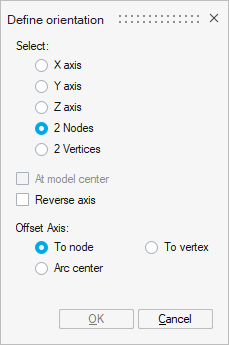
-
Radial / Orthoradial: Magnetic direction of the selected body either diverge/converge from the given point
4 types:
- Radial outwards
- Radial inwards
- Orthoradial clockwise
- Orthoradial anticlockwise
Orientation type Illustration Unidirectional 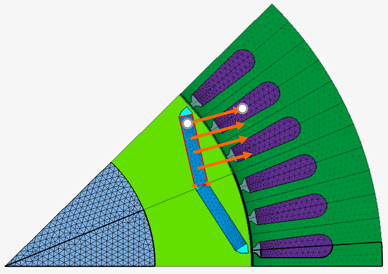
Radial 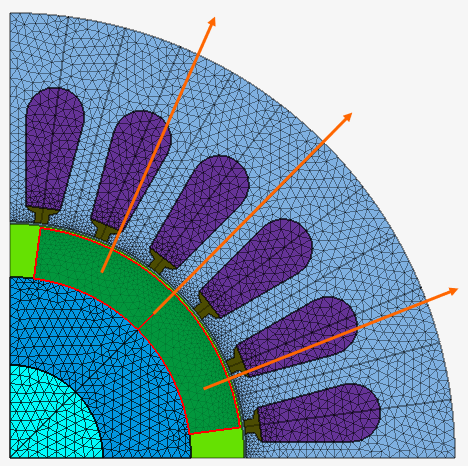
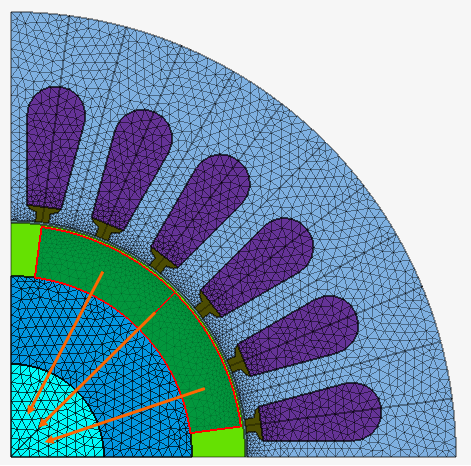
outwards inwards Orthoradial 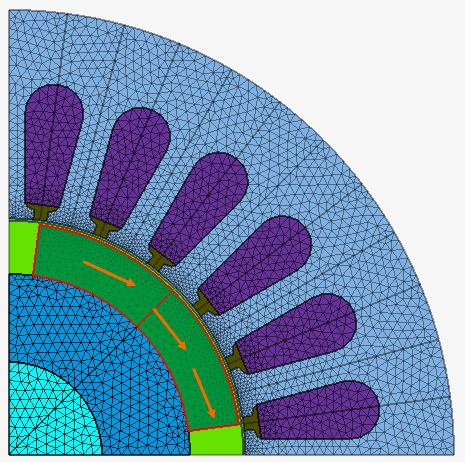
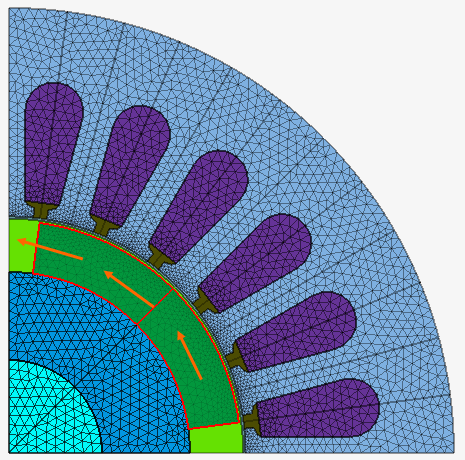
clockwise anticlockwise
-
-
Check the Magnet losses checkbox to take it into account (or do not check the checkbox to disable the Magnet losses computation)
Note: The Magnet losses checkbox is checked by default in 2D. The solving time could increase more or less because of the eddy currents computation.Note: The Magnet losses option is only available in Transient Magnetic solutions. -
Check the Demagnetization checkbox to take it into account (or do not check the checkbox to ignore the demagnetization)
Note: By default the Demagnetization checkbox is not checked.Note: The Demagnetization option is only available in Transient Magnetic solutions.
Theoretical information about demagnetization
A magnet can be demagnetized when there is an important magnetic field placed upon it. This effect is normally studied by looking at the second and the third quadrant of the hysteresis curve of the magnetic material.
When the magnetic field increases, we follow the B(H) curve of the magnet, however when we go back we will not follow the magnetic curve, but a recoil curve.
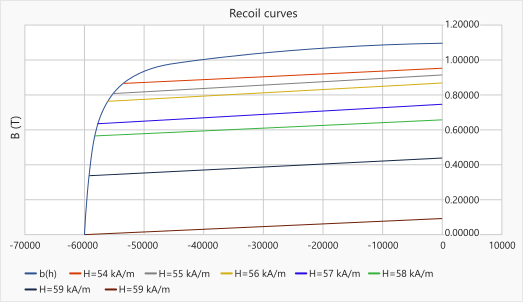
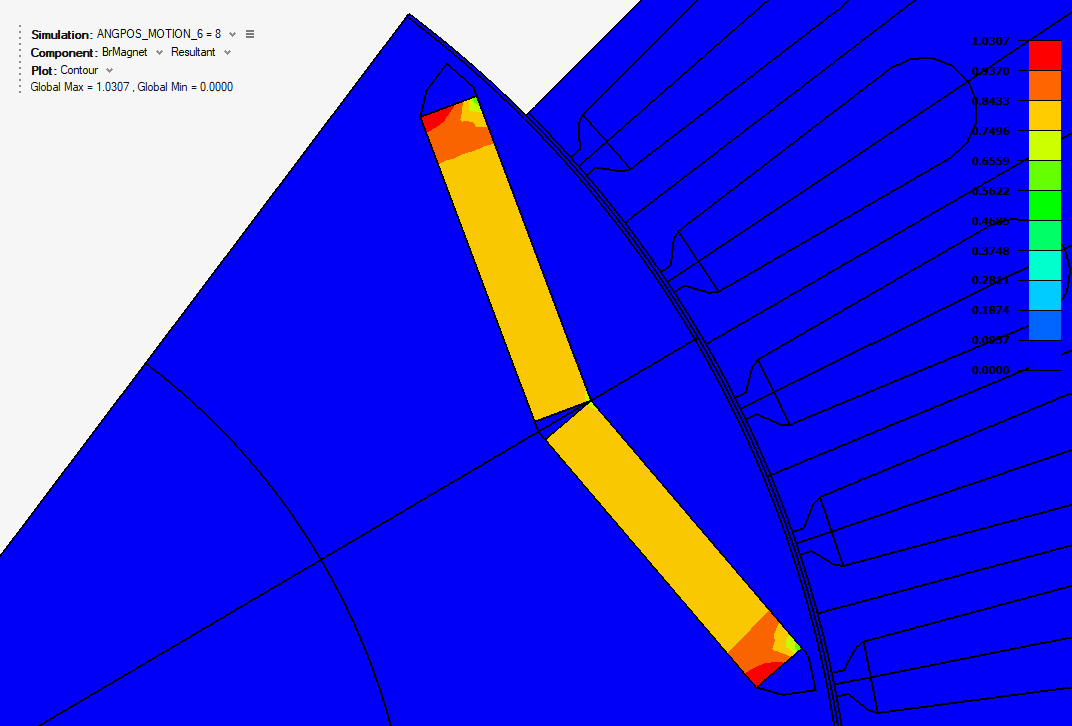
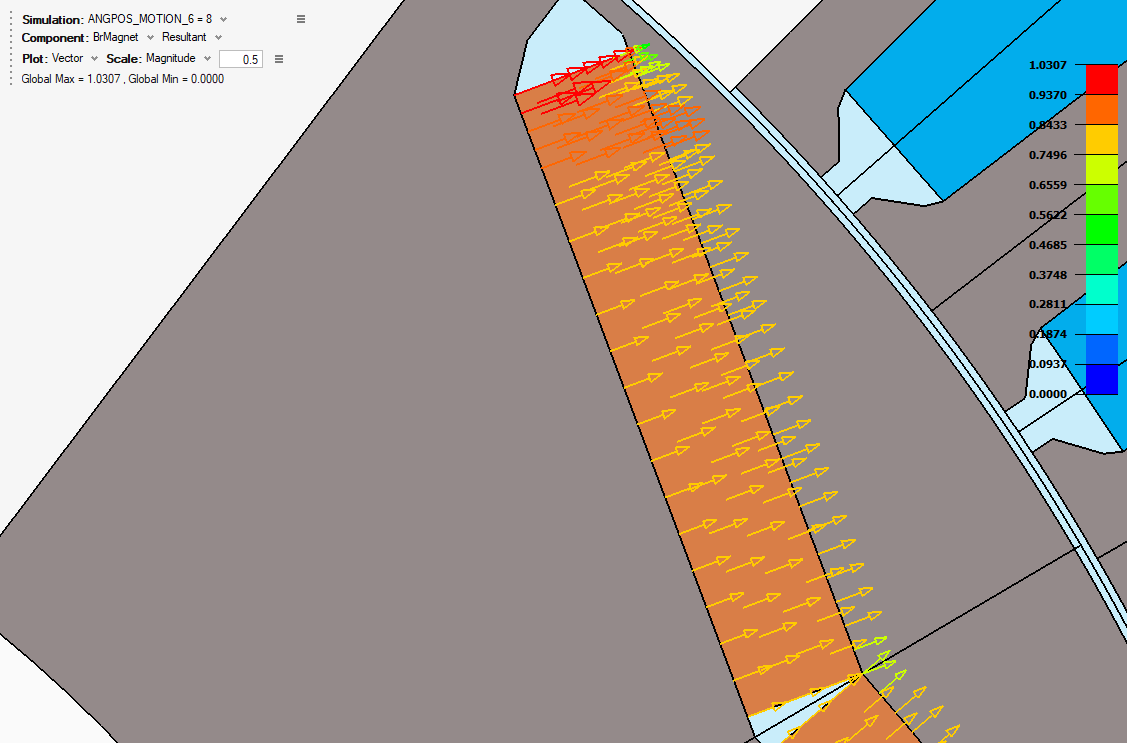
The vector quantity BrMagnet available, has the advantage of containing the explicit direction and orientation of the remanent field.
Here is an example of the postprocessing of the vector quantity of the demagnetization (BrMagnet) in the magnet part:
| module of vector quantity BrMagnet | vector quantity BrMagnet (direction and orientation of the remanent field) |
|---|---|
 |
 |