Jump to main content
Altair SimSolid User Guide

2026

Index
  1. Home
  2. Tutorials

    Discover SimSolid functionality with interactive tutorials.

  3. Analysis

    SimSolid Analysis tutorials cover the breadth of available simulation capabilities, ranging from fundamental Static Structural and Modal analyses to advanced dynamic, thermal, and coupled simulations. Key topics include performing Linear Buckling, Non-linear Static/Incremental analyses, and various Thermal analyses (Steady State and Transient).

  4. SS-T: 4180 Modal Superelement Export Analysis

    Tutorial Level: Advanced Create modal superelement export analysis.

  5. Part 2: Solve the Residual Model

  • Welcome
  • What's New

    View new features for SimSolid 2026.

  • Get Started

    Learn the basics and discover the workspace.

  • Tutorials

    Discover SimSolid functionality with interactive tutorials.

    • Tutorial Videos

      Links to SimSolid instructional videos.

    • Access the Model Files

      Learn how to access and download required model files.

    • Interface with External Products

      Learn about using other products with SimSolid.

    • Assembly

      SimSolid Assembly tutorials cover essential setup steps, from importing geometry and materials to defining special parts like bolts and rigid bodies, managing the assembly structure with clipping and part replacement, and utilizing advanced features like Local Coordinate Systems (LCS) and composite materials.

    • Connections

      SimSolid SimSolid Connection tutorials guide users through defining various ways parts interact, covering the creation of explicit connections like Adhesives, Spot Welds, Bushings, Joints, Rivets, Seam Welds, Laser Welds, and Cables. They also cover editing existing connections, setting up custom contact conditions, applying Remote Mass, and understanding the Clamping contact type.

    • Boundary Conditions

      SimSolid Boundary Condition tutorials focus on applying various external loads and constraints to your models. They cover applying imported data like forces and displacements (including via .csv files onto specific spots), setting up specialized loads such as bearing loads and hydrostatic pressure, defining thermal effects (expansion/shrinkage and steady-state analysis with solar load), applying wind load, and utilizing springs and mass definitions. The set also includes an advanced example integrating non-linear separating contact with bolt pretensioning.

    • Analysis

      SimSolid Analysis tutorials cover the breadth of available simulation capabilities, ranging from fundamental Static Structural and Modal analyses to advanced dynamic, thermal, and coupled simulations. Key topics include performing Linear Buckling, Non-linear Static/Incremental analyses, and various Thermal analyses (Steady State and Transient).

      • SS-T: 4000 Static Structural Analysis

        Tutorial Level: Beginner Perform a static structural analysis of a pullup bar assembly.

      • SS-T: 4001 Buckling Linear Analysis

        Tutorial Level: Beginner Perform buckling linear analysis on an I-section beam.

      • SS-T: 4005 Structural Sequential Analysis

        Tutorial Level: Intermediate Run structural sequential (loading and unloading) analysis.

      • SS-T: 4010 Structural Non-linear Analysis

        Tutorial Level: Intermediate Run structural non-linear analysis in SimSolid.

      • SS-T: 4015 Non-linear Incremental Analysis

        Tutorial Level: Intermediate Review incremental non-linear buckling.

      • SS-T: 4020 Modal Analysis

        Tutorial Level: Beginner Use modal analysis to calculate the first 3 flexible modes of a bridge assembly.

      • SS-T: 4025 Modal Prestressed Analysis

        Tutorial Level: Intermediate Apply prestress conditions to modal analysis.

      • SS-T: 4026 Modal Prestressed Linked to Multi-loadcase Analysis

        Tutorial Level: Intermediate

      • SS-T: 4030 Steady State Thermal Analysis

        Tutorial Level: Beginner Perform a thermal analysis on a cup model.

      • SS-T: 4035 Thermal Transient Analysis

        Tutorial Level: Intermediate Perform a thermal transient analysis.

      • SS-T: 4040 Multi-loadcases Workbench

        Tutorial Level: Intermediate Learn to use the Multi-loadcases workbench.

      • SS-T: 4045 Structural Thermal Transient Analysis

        Tutorial Level: Intermediate Learn how to create a structural analysis linked to a thermal transient analysis in SimSolid.

      • SS-T: 4048 Structural Thermal Coupled Analysis with Temperature Dependent Mechanical Properties

        Tutorial Level: Advanced Create structural thermal coupled analysis for exhaust manifold applied with material having temperature dependent mechanical properties.

      • SS-T: 4050 Coupled Structural Thermal Analysis

        Tutorial Level: Intermediate Create coupled structural thermal analysis in SimSolid for a piston head.

      • SS-T: 4055 Structural Thermal Imported Analysis

        Tutorial Level: Intermediate Create a structural thermal imported analysis, and then create and link to a thermal-stress analysis SimSolid.

      • SS-T: 4060 Frequency Response Analysis

        Tutorial Level: Advanced Create frequency response analysis in SimSolid for a vertical wind turbine assembly.

      • SS-T: 4070 Random Response Analysis

        Tutorial Level: Advanced Create random response analysis in SimSolid.

      • SS-T: 4080 Transient Analysis

        Tutorial Level: Advanced Run dynamic transient analysis in SimSolid.

      • SS-T: 4085 Squeak and Rattle Analysis

        Tutorial Level: Advanced Create squeak and rattle analysis in SimSolid and review the status at different points along the model.

      • SS-T: 4090 SN Time Fatigue

        Tutorial Level: Advanced Create an SN Time fatigue loadcase.

      • SS-T: 4100 SN Time - Import Loadcase - Channel Mapping

        Tutorial Level: Advanced Import channels and create events automatically using a .csv file.

      • SS-T: 4110 SN Sequential Fatigue

        Tutorial Level: Advanced Create an SN Sequential fatigue loadcase.

      • SS-T: 4120: SN Sequential - Import Sequences

        Tutorial Level: Advanced Import sequences for SN Sequential fatigue analysis from a .csv file.

      • SS-T: 4130 Spot Weld Fatigue Analysis

        Tutorial Level: Advanced Define and run spot weld fatigue analysis.

      • SS-T: 4135 Seam Weld Fatigue Analysis

        Tutorial Level: Advanced Define and run seam weld fatigue analysis.

      • SS-T: 4136 Random Fatigue Analysis

        Tutorial Level: Advanced Define and run random fatigue analysis.

      • SS-T: 4140 Global-local Analysis

        Tutorial Level: Intermediate Create global-local analysis.

      • SS-T: 4150 Interference Fit using Align Contact Condition

        Tutorial Level: Intermediate

      • SS-T: 4160 Response Spectrum Analysis

        Tutorial Level: Advanced

      • SS-T: 4170 Structural Superelement Export Analysis

        Tutorial Level: Advanced Create structural superelement export analysis.

      • SS-T: 4180 Modal Superelement Export Analysis

        Tutorial Level: Advanced Create modal superelement export analysis.

        • Part 1: Export the Superelement

        • Part 2: Solve the Residual Model

      • SS-T: 4200 Electromagnetic Analysis

        Tutorial Level: Advanced Create S-parameters and modal electromagnetics analysis in SimSolid for a t-block model. A waveguide t-block is a 3-port device used to divide or combine power in waveguide system. For this tutorial, we are using an H-plane waveguide system.

      • SS-T: 4210 Rotordynamic Analysis

        Tutorial Level: Advanced Create modal rotordynamics analysis in SimSolid for a vertical wind turbine assembly.

    • Post Processing

      SimSolidPost Processing tutorials guide you on how to review and interpret analysis results effectively. They cover creating geometric aids like Datum Points and Planes for section-cuts and reference, querying results on specific areas like loaded faces, and calculating specialized metrics such as Linearized Stress and Partial Response/Dynamic Reactions. Additionally, they show how to use Linear Superposition, post-process Seam Welds, find potential Collisions quickly, and use a Remote Point for result review.

  • Interface with External Products

    Interfaces that support SimSolid output file format.

  • Geometry

    Information about treatment and properties of geometric entities in SimSolid.

  • Assembly

    Summary of available functionality for defining the properties and behavior of parts in the model.

  • Connections

    Connections are used to define the association of different regions of interest between parts in an assembly.

  • Create Analysis

    Create an analysis for your project.

  • Boundary Conditions

    Boundary Conditions available for SimSolid.

  • Post Processing

    Run analyses and view a variety of results in SimSolid.

  • Design Study

    Design studies allow you to quickly evaluate and compare the structural performance from different design scenarios.

  • Verification Problems

    Solved verification models.

  • Frequently Asked Questions

    This section provides quick responses to typical and frequently asked questions regarding

Part 2: Solve the Residual Model

Import Geometry

  1. Open a new SimSolid session.
  2. Click Import from file .
  3. In the Open geometry files dialog, choose Residual_model.step.
  4. Click Open.
    The assembly will load in the modeling window.

Assign Material

  1. In the Project Tree, open the Assembly workbench.
  2. In the Assembly workbench, select Apply/review materials > Apply materials.
  3. Select Steel from the Generic materials list.
  4. Click Apply to all parts.
  5. Click Close.
In the Assembly workbench of the Project Tree, material properties are identified for each part.

Import Superelement

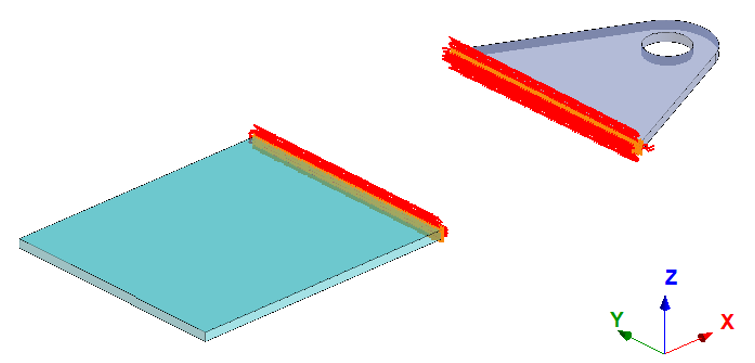
  1. In the Connections workbench, select Virtual connector > Superelement.
  2. In the dialog, select appropriate units for Coordinates as [mm], Stiffness matrix as [N/mm], Load vectors as [N], and Mass matrix as [t].
  3. Select the DMIG file which was exported in Part 1 of this tutorial from File Explorer.
  4. Click OK.
Figure 1.


Create Modal Analysis

  1. In the main window toolbar, click Modal Analysis.
  2. In the Number of modes window, specify the number of modes as 12.
  3. Click OK.
    The new modal analysis appears in the Project Tree.

Edit Solution Settings

  1. In the Analysis branch of the Project Tree, double-click on Solution settings.
  2. In the Solution settings dialog, for Adaptation select Global+Local in the drop-down menu.
  3. Click OK.

Run Analysis

  1. In the Project Tree, open the Analysis Workbench.
  2. Click Solve.

Review Results

  1. In the Project Tree, select Modal 1 subcase.
  2. In the Analysis Workbench, select Result plot > Displacement > Displacement magnitude.
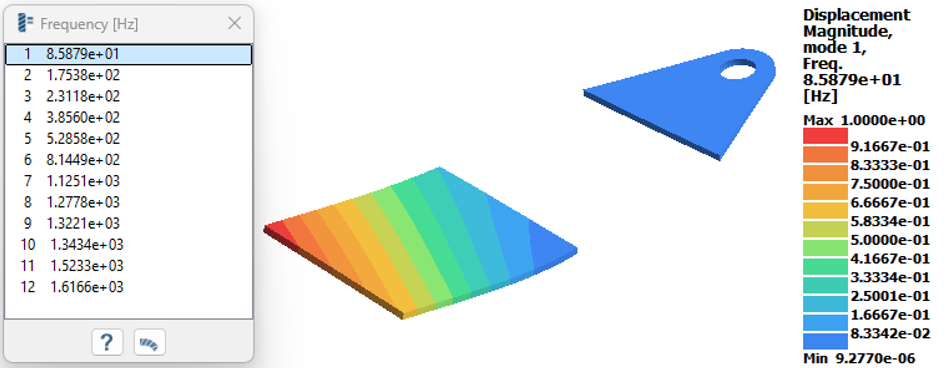
Figure 2.


On this page
  • Import Geometry
  • Assign Material
  • Import Superelement
  • Create Modal Analysis
  • Edit Solution Settings
  • Run Analysis
  • Review Results

© 2025 Altair Engineering, Inc. All Rights Reserved.

Intellectual Property Rights Notice | Technical Support | Cookie Consent