Test No. VE03Propagation of the fundamental mode wave
in a loaded waveguide
Definition
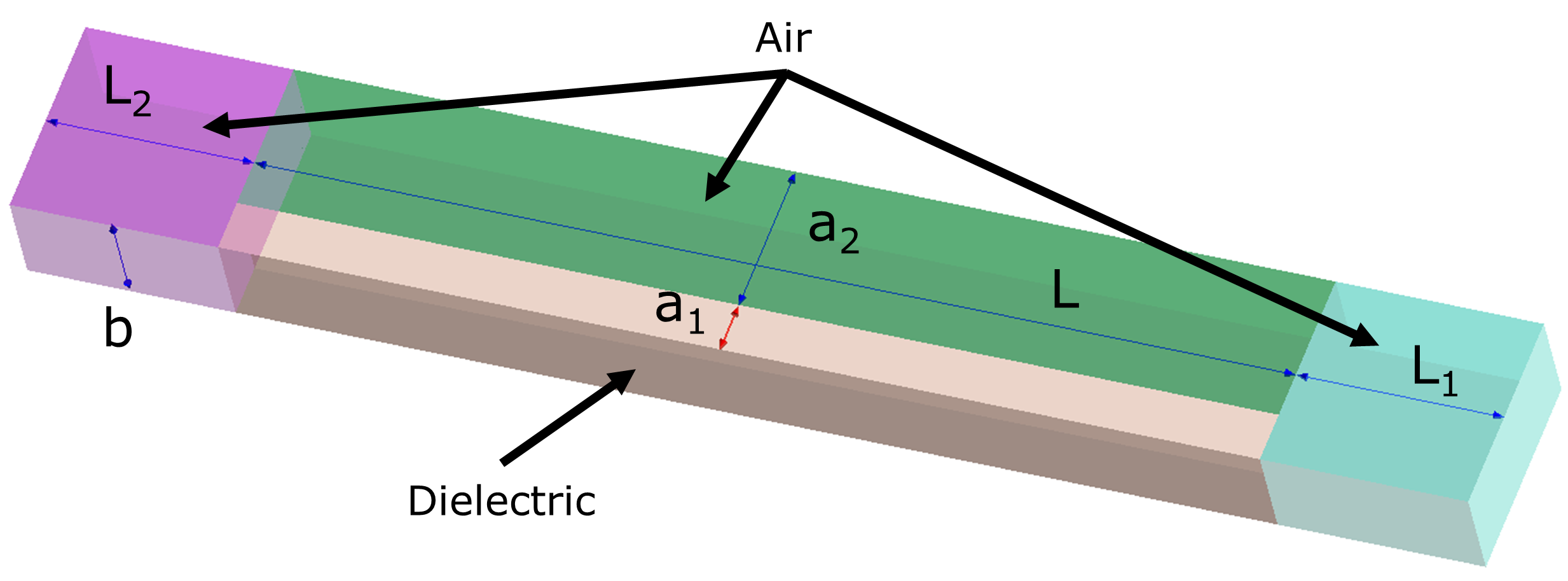
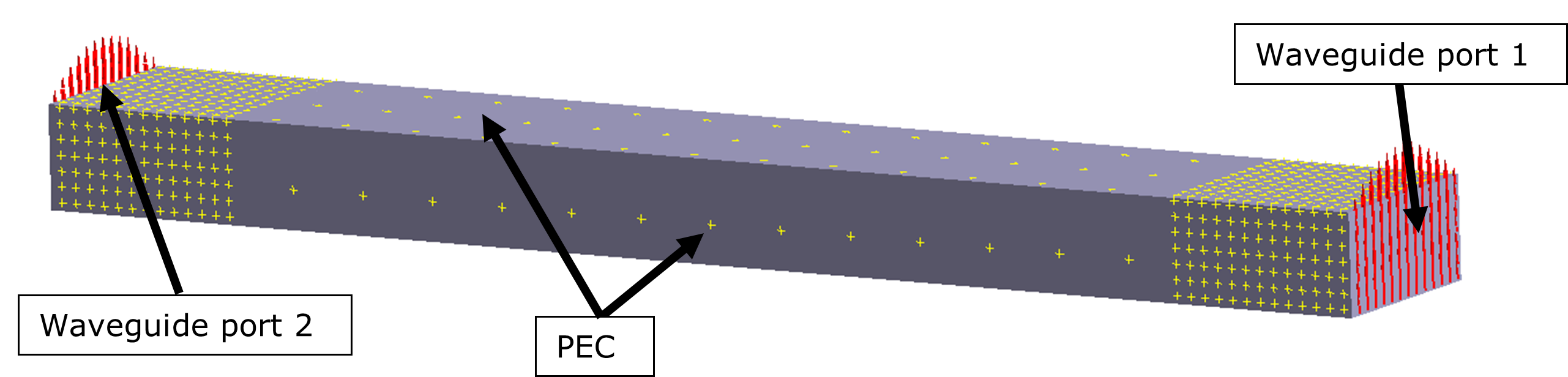
Figure 1. Figure 2. The details of the model are:
Figure
1: a1 = 5mm, a2 = 15mm, a = a1 + a2, b = 10 mm, L = 100 mm, L1 =
L2 = 20 mm
All side walls are at the PEC (Perfect Electric Conductor) conditions, and
end faces are waveguide ports
The material properties are:
Properties
Value
Dielectric relative permittivity ()
4.0
Dielectric relative permeability ()
1.0
Air relative permeability ()
1.0
Air relative permeability ()
1.0
Reference Solution
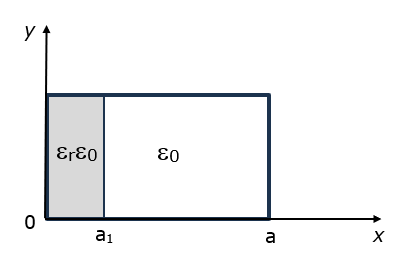
Figure 3. Cross section of the waveguide In both the dielectric and the air, the wave is propagating with the same wave
number and common factor is , where is the longitudinal wave number. We are looking for
the TEm0 modes (the one with m = 1 is the fundamental mode), which means
that there is no dependence on y1.
Equations for longitudinal magnetic field become:
Where,
and
Depending on the combination of the model parameters both and are positive or is positive and is negative.
In the first case the value of is obtained from the solution of the following
equation:
This is after substituting and from their definitions1.
In the case of the negative value of in a similar way the value of is obtained from the solution of the equation (this
case is complementary to the one in Pozar1):
Where,
and it is positive.
In the first case the electric field distribution is:Figure 4. In the second case the electric field distribution is:Figure 5.
Results
In the
case of and equation (1) is in effect, while at the and equation (2) should be used.Figure 6. Electric field distribution at f = 7.5GHz with Waveguide
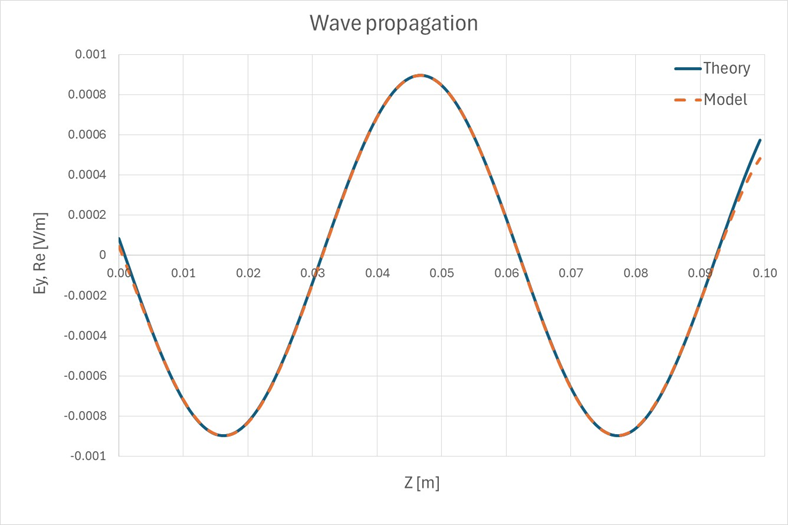
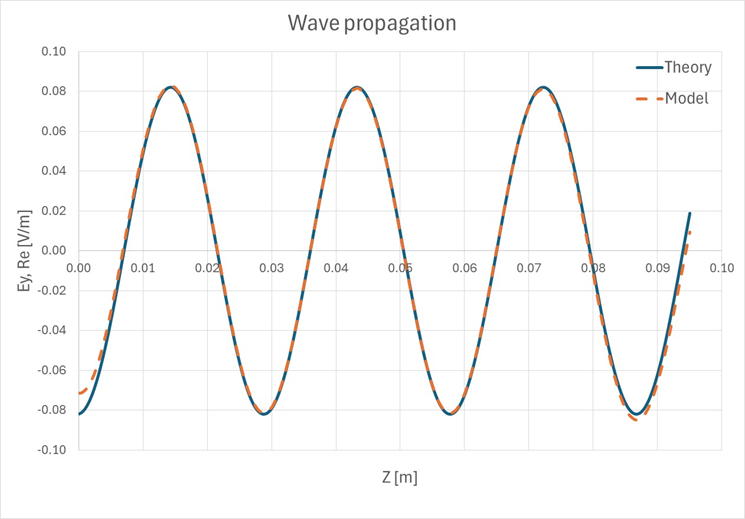
Port 1 active Figure 7. Comparison of theoretical and modeled electric field distribution along
the line in above figure Figure 8. Electric field distribution at f = 10GHz with Waveguide
Port 1 active Figure 9. Comparison of theoretical and modeled electric field distribution along
the line in above figure
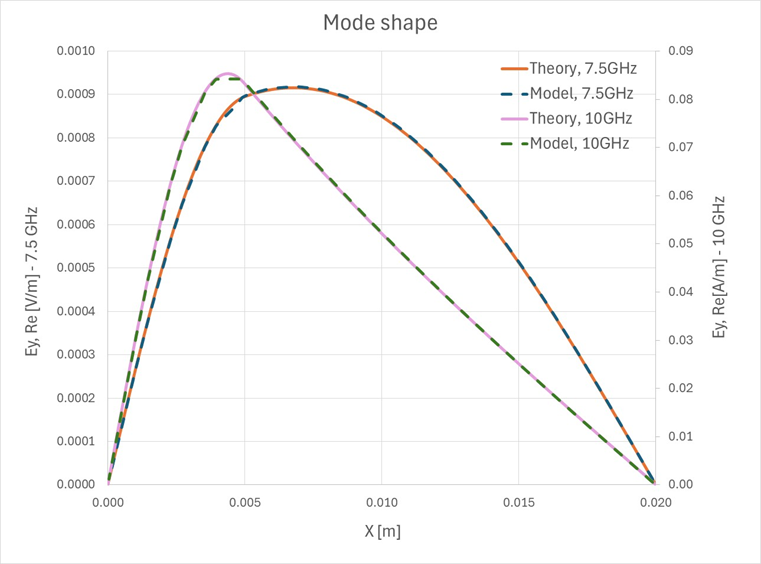
The above formulas for the field distribution are illustrated in the
following graph (x is orthogonal to the direction of the wave propagation here and
the sampling line goes through the maximum of the field distribution):Figure 10. Comparison of theoretical and modeled electric field distribution for
fundamental mode at different frequencies