
IM_SQ_3Phase
Inputs
This section is dedicated to the specification of 3-Phase induction machines with a squirrel cage.
The user inputs, the cross section, the axial view and datasheet can be selected and displayed.
Here is the process to modify the structural data from the general data panel.
 |
|
|---|---|
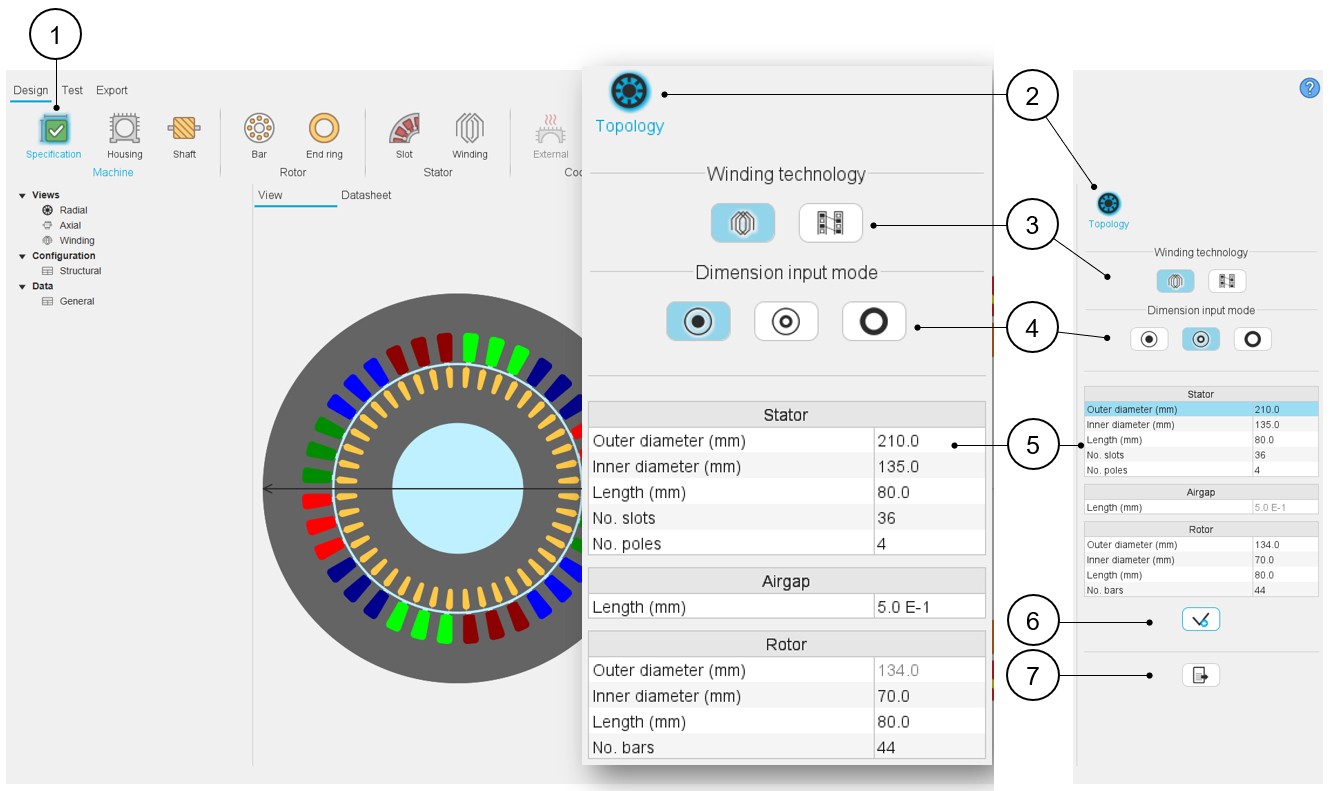
| 1 | Open the Specification panel (Click on the icon Specification). |
| 2 | Select the topology section for defining the structural data of the machine, meaning the main overall dimensions (stator and rotor outer and inner diameters) and characteristics like the number of slots, poles. |
| 3 | Select the winding technology: either classical winding or hairpin winding technology. This is applied in the winding area. |
| 4 | Choose a way to define the diameters of the machine and the airgap. See the dedicated section above. |
| 5 | Modify the values of structural data – when relevant, the
corresponding arrow is displayed on the view. See the list of input data below. |
Here are the user input parameters to define the structural data of the machine:
- Stator outer diameter
- Stator inner diameter
- Stator length
- Number of slots
- Number of poles
- Airgap length
- Rotor outer diameter
- Rotor inner diameter
- Rotor length
- Number of bars
The modification of the structural data can lead to the modification of the user input parameters in defining dimensions of parts like slots or bars. When modifications occur, a warning is displayed.
The application ranges for structural data are defined in the section “Topology /
Structural data – Validity domain”.
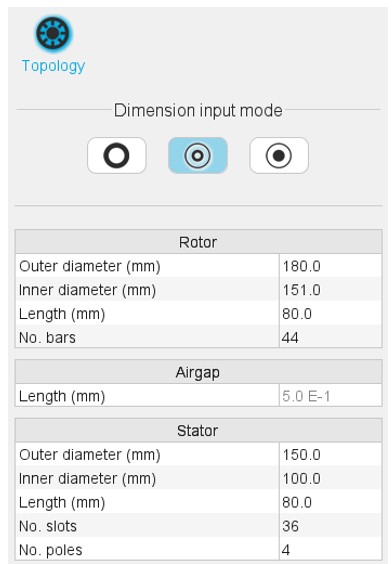
Note: For machines with an
outer rotor, the order of user inputs changes as shown below.The choice of the
number of phases is not possible. The outer rotor machines are considered with a
3-Phase winding.
Advice for use
Please refer to the section “Topology / Structural data – Validity domain”.