
Insulation
Definition and terminology
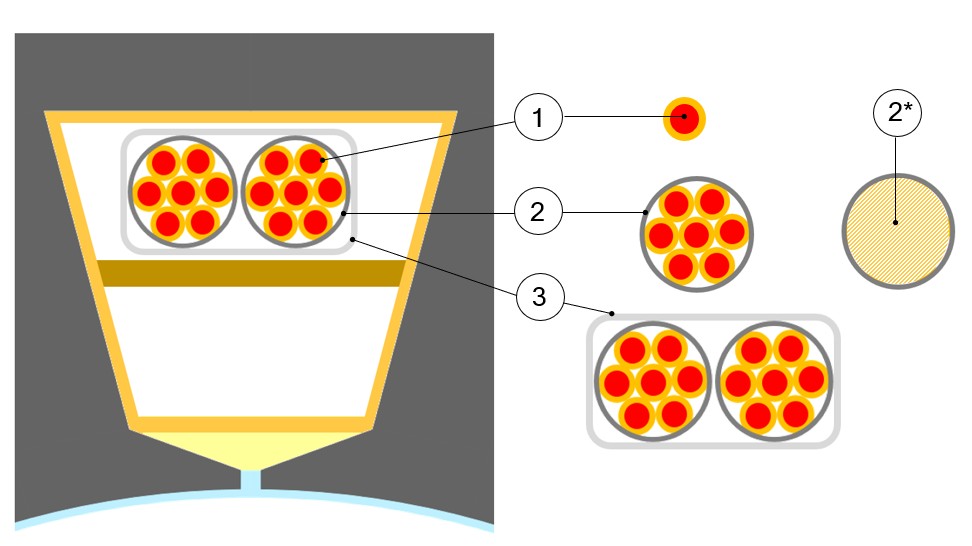 |
|
|---|---|
| 1 | Wire (also called strand). |
| 2 | Conductor, that also corresponds to a turn section (one conductor
= one turn). A conductor is composed of one or several wires in parallel (wires in hand). |
| 2* | The hatched area corresponds to the conductor’s useful area. Area that includes: the wires + insulation + free space. This is not the conductive area. |
| 3 | Coil, which is an assembly of several conductors (i.e., several turns per coil). |
Circular shape type wire
Here are all the available insulation types
| Label | Tooltip, note, formula |
|---|---|
| Wire | Insulation thickness of the wire |
| Conductor | Insulation thickness of the conductor. Available only for rectangular shape type wire. See the below illustration. |
| Coil | Insulation thickness of the coil. Available only for rectangular shape type wire. See the below illustration. |
| Liner | Insulation thickness of the liner |
| Phase separator | Insulation thickness of the phase separator |
| Impregnation | Insulation spread inside the slot |
| Impregnation goodness | Quality of impregnation (percentage of winding impregnation) |
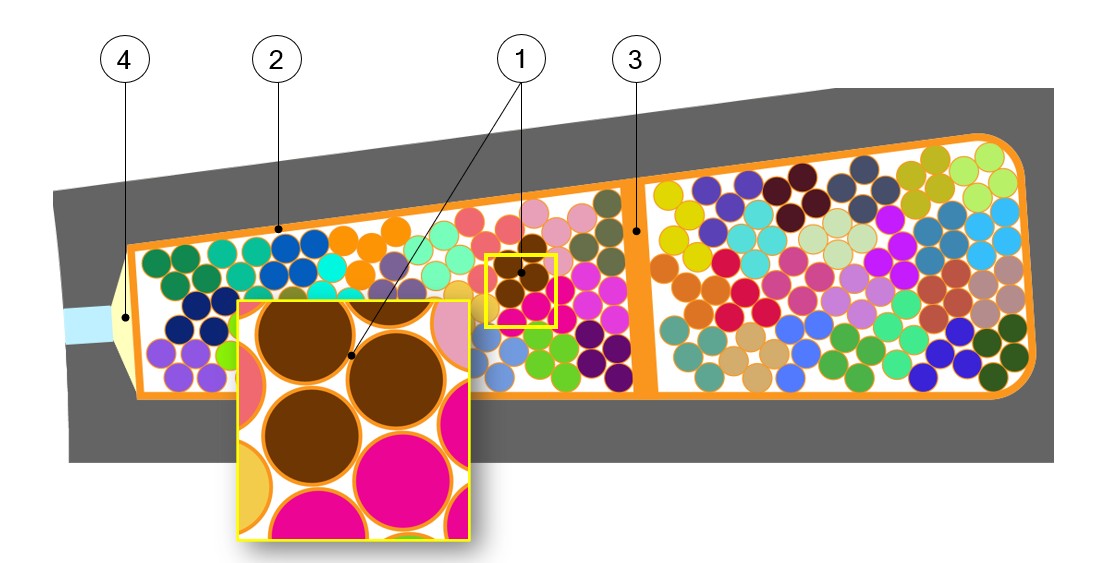 |
|
|---|---|
| 1 | Insulation thickness of the wire |
| 2 | Insulation thickness of the liner |
| 3 | Insulation thickness of the phase separator |
| 4 | Wedge to close the slot and maintain the winding inside. It is a part of the slot insulation. However, when needed, the wedge must be defined in the slot topology configuration and not in the insulation settings of the winding area. |
Rectangular shape type wire
Here are all the available insulation types.
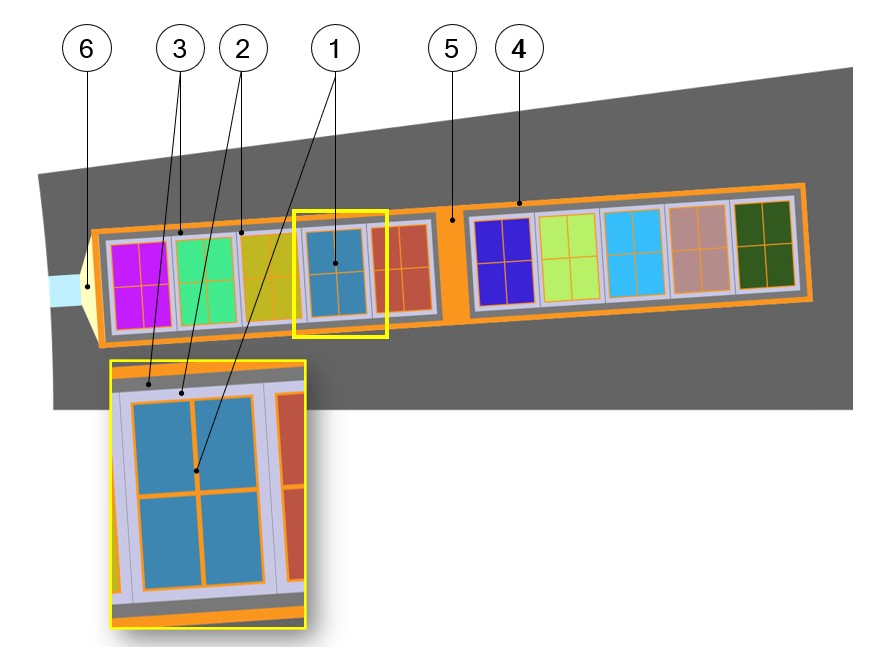 |
|
|---|---|
| 1 | Insulation thickness of the wire |
| 2 | Insulation of conductors. This is available only for rectangular shape type wire when the conductor (i.e., the elementary group of wires in hand) has a rectangular outer shape. |
| 3 | Insulation of coils. This is available only for rectangular shape type wire when the coil (i.e., the group of turns inside a layer) has a rectangular outer shape. |
| 4 | Insulation thickness of the liner |
| 5 | Insulation thickness of the phase separator |
| 6 | Wedge to close the slot and maintain the winding inside. It is a part of the slot insulation. However, when needed, the wedge must be defined in the slot topology configuration and not in the insulation settings of the winding area. |
Impregnation
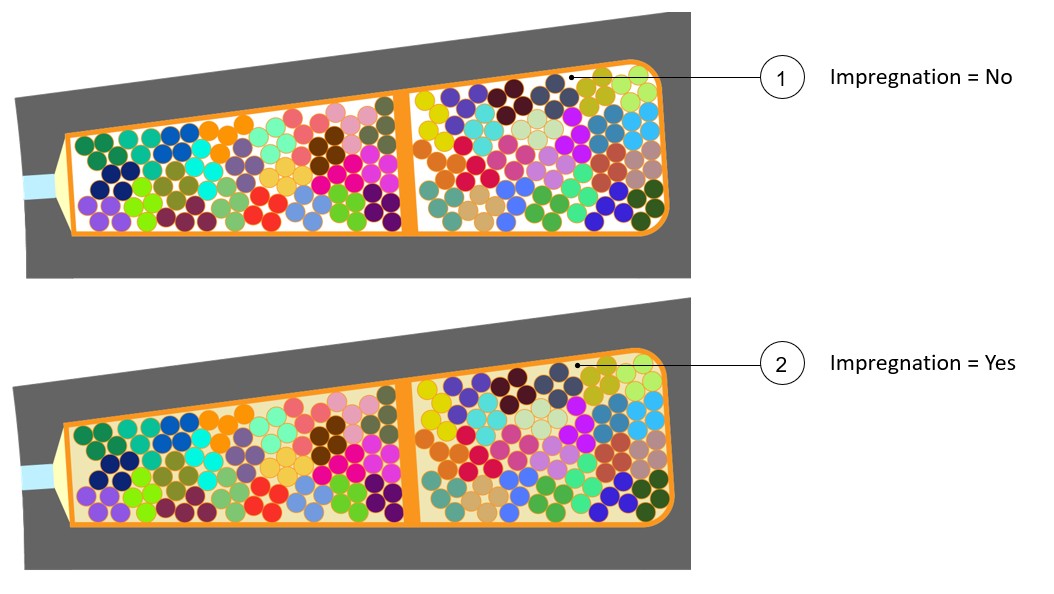 |
|
|---|---|
| 1 | Winding without impregnation. The surface of the slot’s free area is white. |
| 2 | Winding with impregnation. The free area of the slot is colored
(light yellow). The impregnation goodness is defined by indicating the ratio between the volumes of impregnation material and air bubbles to be considered. |