
Since version 2026, Flux 3D and Flux PEEC are no longer available.
Please use SimLab to create a new 3D project or to import an existing Flux 3D project.
Please use SimLab to create a new PEEC project (not possible to import an existing Flux PEEC project).
/!\ Documentation updates are in progress – some mentions of 3D may still appear.
SimLab Tutorial: PE Power Module
Description
As shown below, the studied device is a power electronic module component. The entire module is assumed to be made of conducting material and the goal is to compute the Z and S parameter.
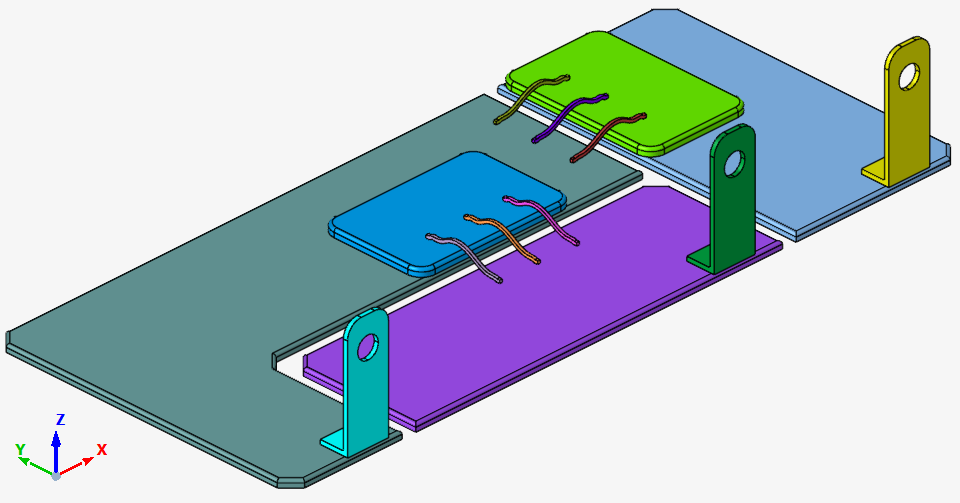
SimLab-EM provides a very convenient power module meshing tool and simple circuit connection method, as shown below:

After the simulation is completed, based on the integration method, users can obtain the results of S parameters and Z parameters:
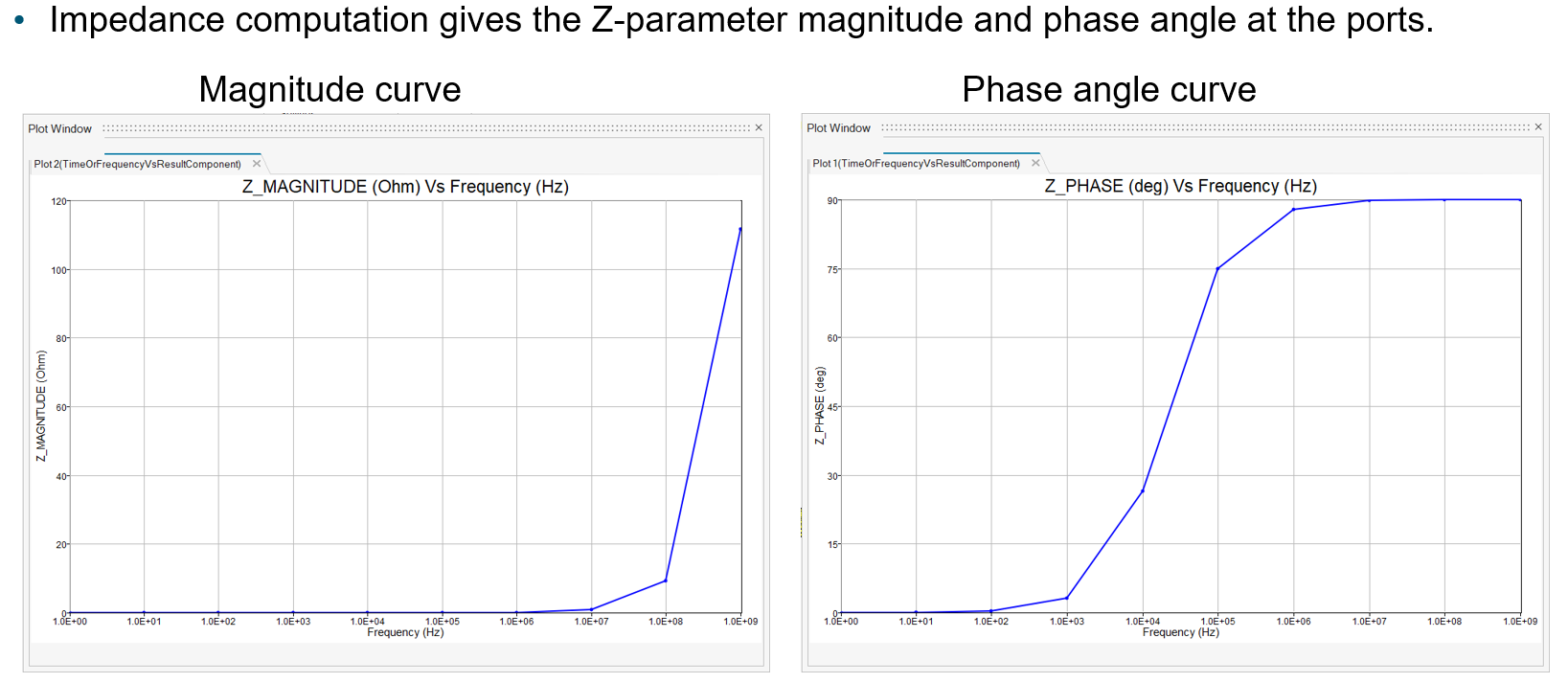
Example access
All files corresponding to this example are accessible in the following link: Tutorial package.
Example: After installing the SimLab 2025 release, you can find the latest Tuto_2024.zip package. This means that the tutorial has not been updated since 2024 release, that the tutorial does not need to be updated, and that the tutorial still works in 2024.1 release and 2025 release.
Step to follow:
- to follow the example step by step, the corresponding files are in
"Example_name_StepByStep" folder containing:
- Input folder: contains initial *.slb databases an other files needed to be able to play manually the tutorial by following the step by step document
- Output folder: empty (contains the obtained results after to play the tutorial)
- Tutorial folder: contains the document describing the example step by step
- to play the tutorial by scripts, the corresponding files are in
"Example_name_PlayScripts" folder containing:
- Input folder: contains initial *.slb databases an other files needed to be able to run scripts of the tutorial
- Output folder: empty (contains the obtained results after to play scripts of the tutorial)
- ScriptsTutorial folder: contains script files to be able to play each analysis