
SM-WFISP
Introduction
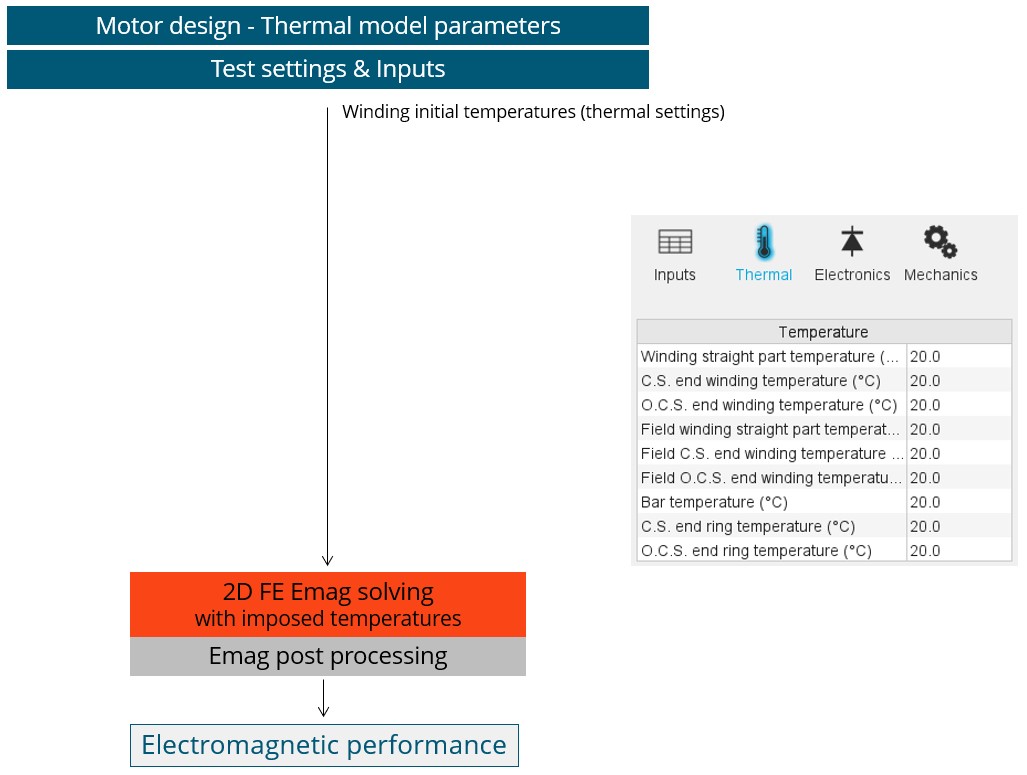
One must define the winding temperatures to make the corresponding material physical properties updated.
For wound field synchronous machines with Inner salient pole, field winding and damper circuit temperatures must be defined.
Temperature of windings
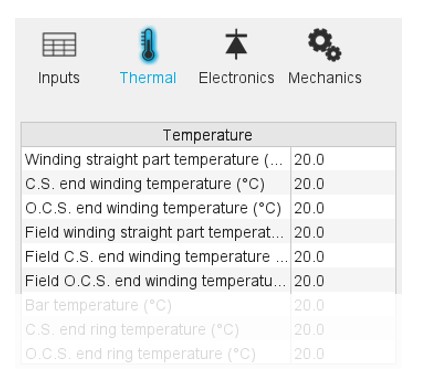
For each of rotor and stator winding, it is possible to define temperature of the
three main parts:
- Winding active length temperature (part 1S & 1R)
- Settings of winding temperature Connection Side (C.S.) end winding temperature (part 2S & 2R)
- Opposite Connection Side (O.C.S.) end winding temperature (part 3S & 3R)
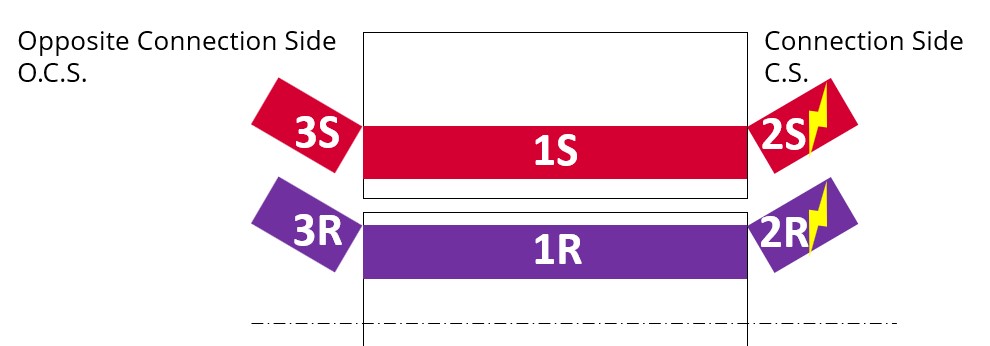
The resulting resistances of each part of the windings are updated according to the
temperature:
- Winding straight part resistance (part 1S & 1R)
- Connection Side (C.S.) end winding resistance (part 2S & 2R)
- Opposite Connection Side (O.C.S.) end winding resistance (part 3S & 3R)
The resulting resistance for the whole windings (considering the three parts described above) is computed as phase resistance, line-line resistance and field resistance.
Temperature of bars and end rings
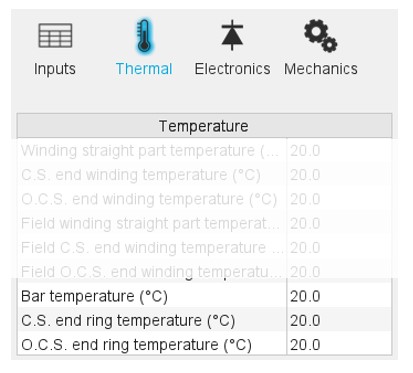
If bars and end rings exist in the design of the machine, it is possible to define
temperature of the three main parts:
- Bar temperature (part 1)
- Connection Side (C.S.) end ring temperature (part 2)
- Opposite Connection Side (O.C.S.) end ring temperature (part 3)
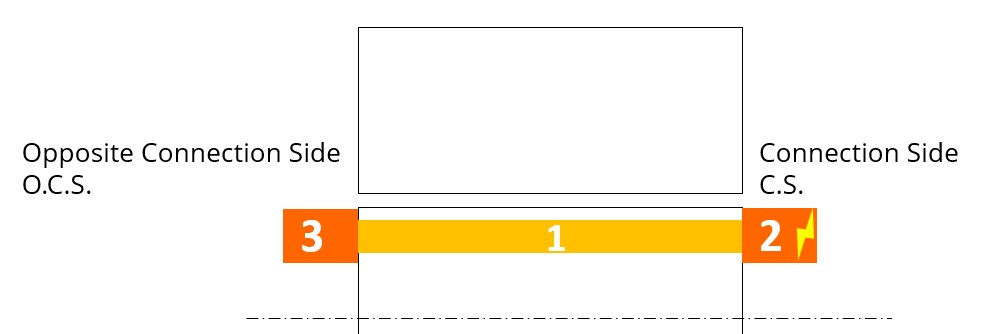
The resulting resistances of each part of the bar and end rings are updated
according to the temperature:
- Bar resistance (part 1)
- Connection Side (C.S.) end ring resistance between bars and between poles (if interpole connection exists) (part 2)
- Opposite Connection Side (O.C.S.) end ring between bars and between poles (if interpole connection exists) (part 3)
Case without thermal solving mode
Below is the flow chart of computation, for tests without thermal solving mode, available for all the tests.
Limitation - Advice for use
Please refer to Advice for use.